2025-06-16 – Addison Oaks County Park
Along our way north, through Ann Arbor, we were passing right by The Gerald R. Ford Presidential Library situated on the north campus of the University of Michigan. Just can’t pass that up! We didn’t realize this was not the location of his museum but it was a nice stop anyway. The visitor gets to walk through displays of his early life, his presidency, his marriage and the works of his wife, Betty. Also on display are the conference room and office he used while in residence at the library. It was a pleasant, worthwhile stop.
Continuing our drive north, past Detroit, we found our campground in Addison Oaks County Park. This is a nice place with concrete pads for RVs and, even, separate parking areas beside each campsite. We both took much needed showers and purchased our tickets for tomorrow’s visit to the Henry Ford Museum of American Innovation.
Dinner was the leftover cream of crab soup from yesterday along with a caprese salad topped with avocado.
2025-06-17 – Henry Ford Museum of American Innovation, Detroit, MI
The Henry Ford Museum of American Innovation is extraordinary; Full Stop!
Go if you can. Plan to spend a full day in JUST the museum. Save the extras like the Greenfield Village, the Ford Rouge Factory Tour and the Giant Screen Experience for another day(s).
The museum presents the development of nineteenth century technology and innovation in the context of society and how it shaped our lives today. It also touches on many other aspects of design and social order. By no means is the museum just about the Ford Motor Company. While it is well represented, it is a minor player in the museum.
We managed to cover nearly all of the subject/display areas in the seven hours we spent inside. All of the areas were engaging. You could actually read all the signage and it all worked to develop a narrative. Many of the items on display are exceedingly rare. Others are astonishingly huge, as in how in the world did they get that in here?
We took way too many photos; like more than 150. Most of the rest of this post will be of photos. The photos cover only a small portion of what was on display in the museum.
Unfortunately, our captions don’t display correctly on phones so view them on a tablet or laptop if you can. And please be aware that most of the photos are “image sliders” so click on the “>” and “<” characters to flip from one photo to another.
One of the first displays is of the evolution of presidential limos. First on display is the one JFK was riding when he was assassinated.


The automobile has gone through many extraordinary changes since it was first imagined and reduced to practice.

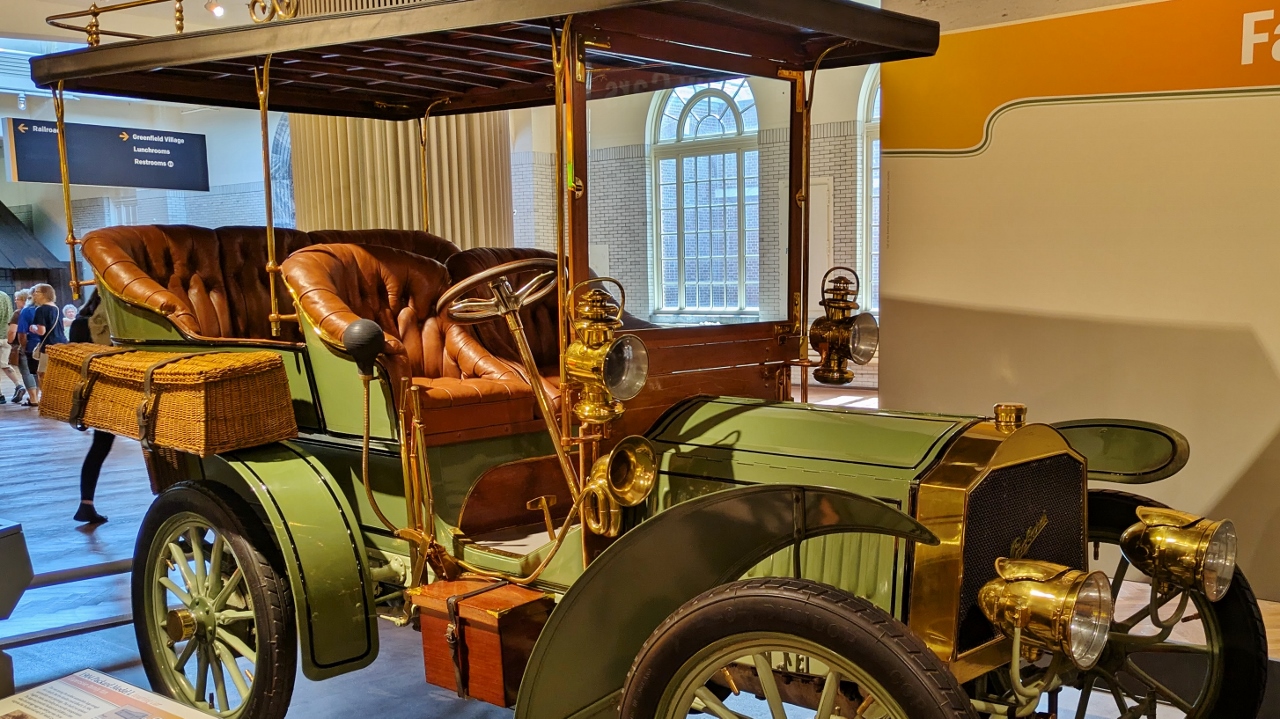
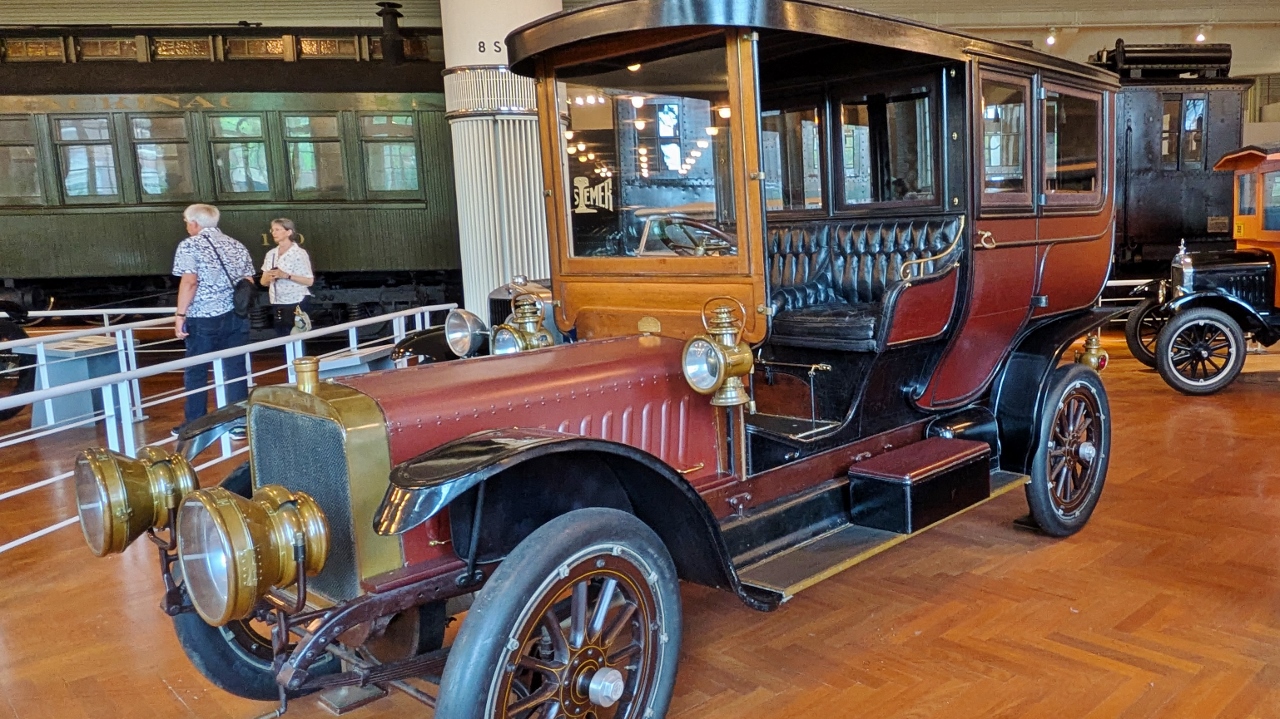


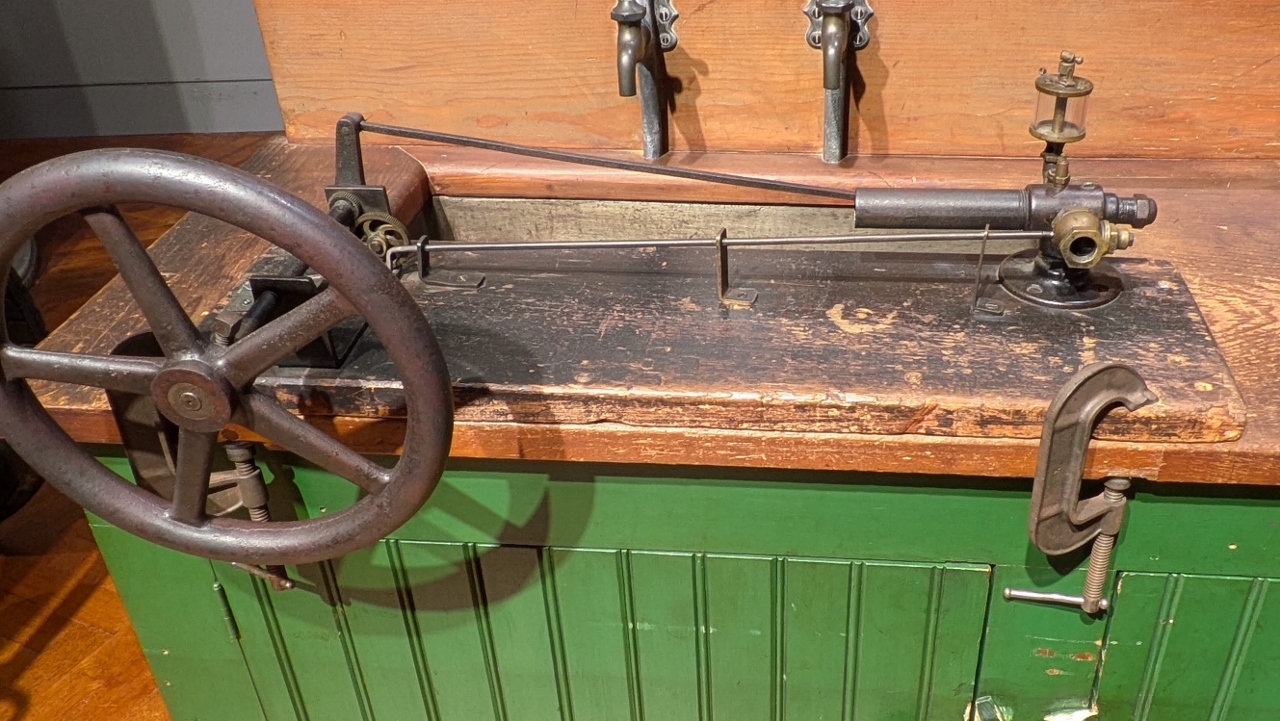
Henry Ford was a primary innovator in automotive manufacture but his first work was more modest.
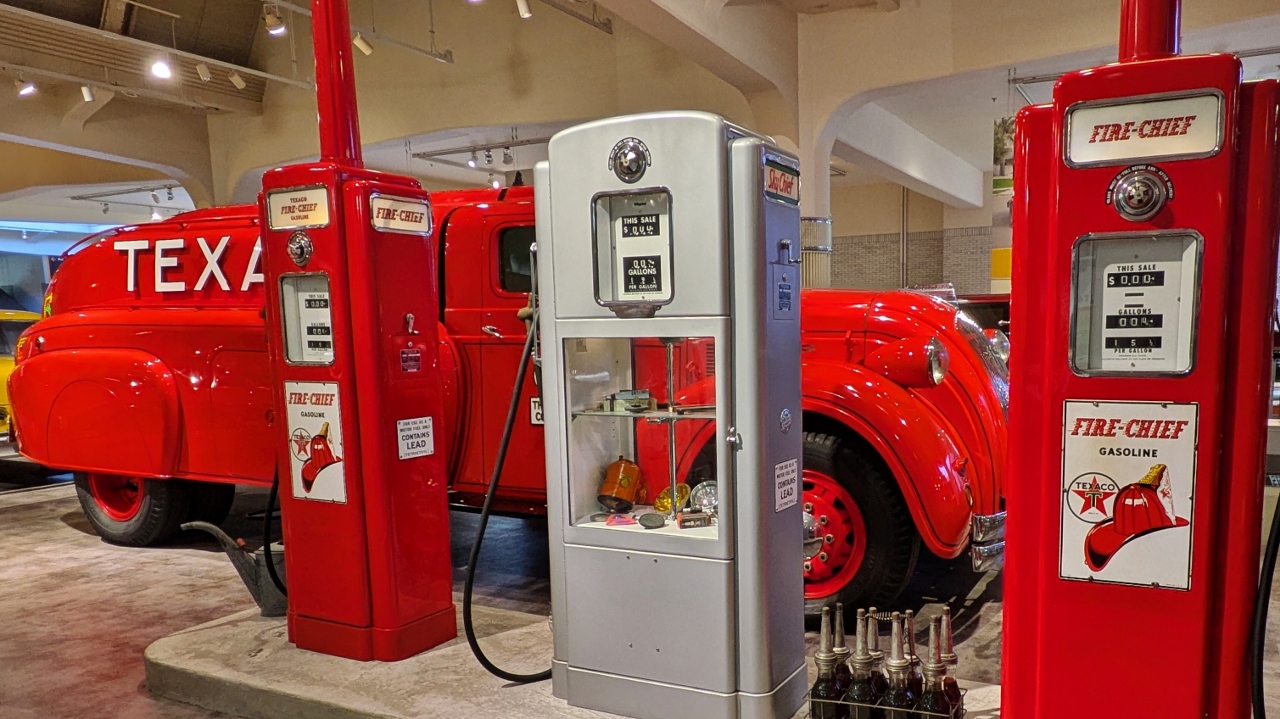
Infrastructure including roads and gas stations had to be developed.
There have been many notable, competitive automobile designs, some successful, some not so much.


Humans are competitive and they compete with whatever is at hand. So, as they developed automobiles they developed competitions with them.


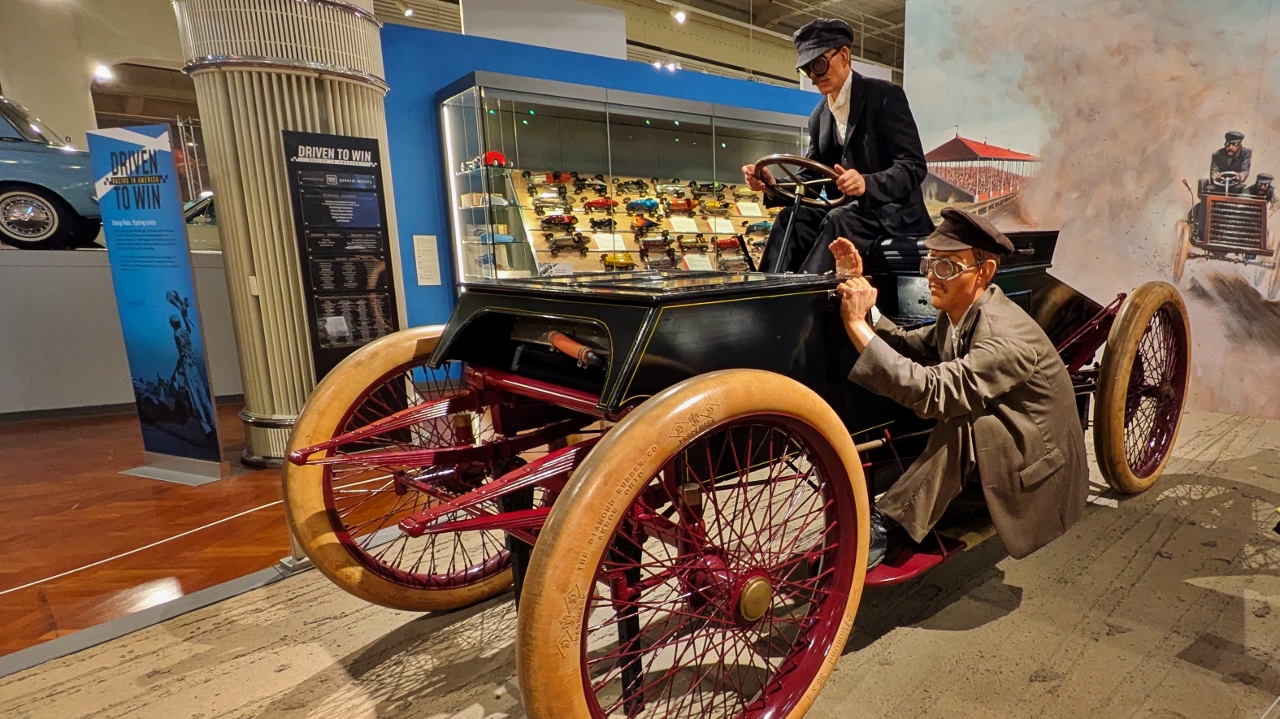

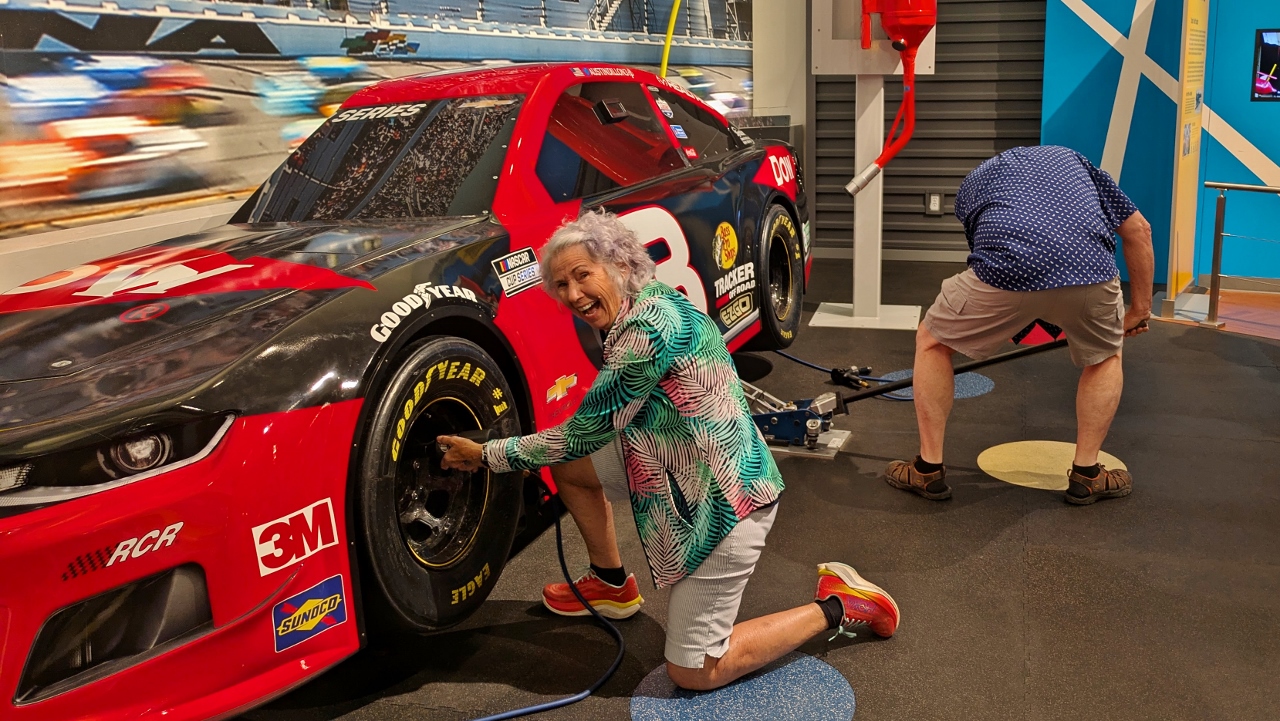
And, as cars got more sophisticated, so did the racing.

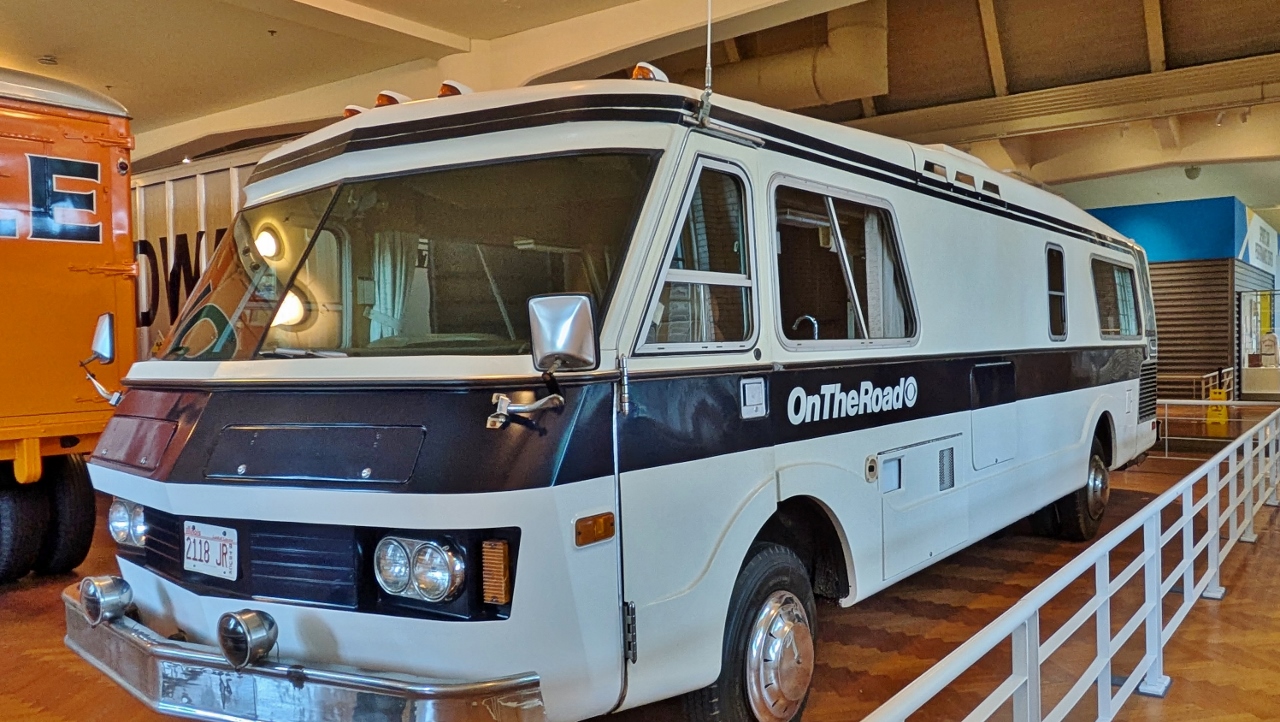
We like camping and are intrigued with the development of recreational vehicles.


Advertisers will utilize whatever catches consumers eyes to promote their products.

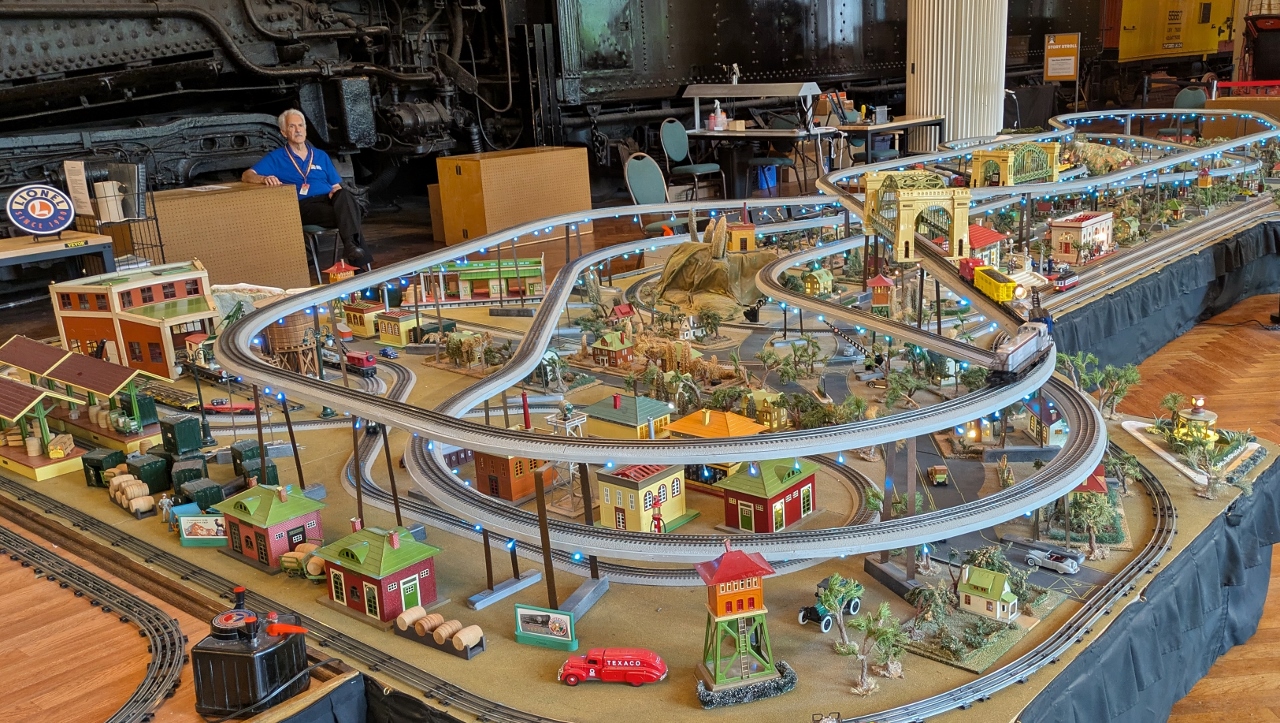

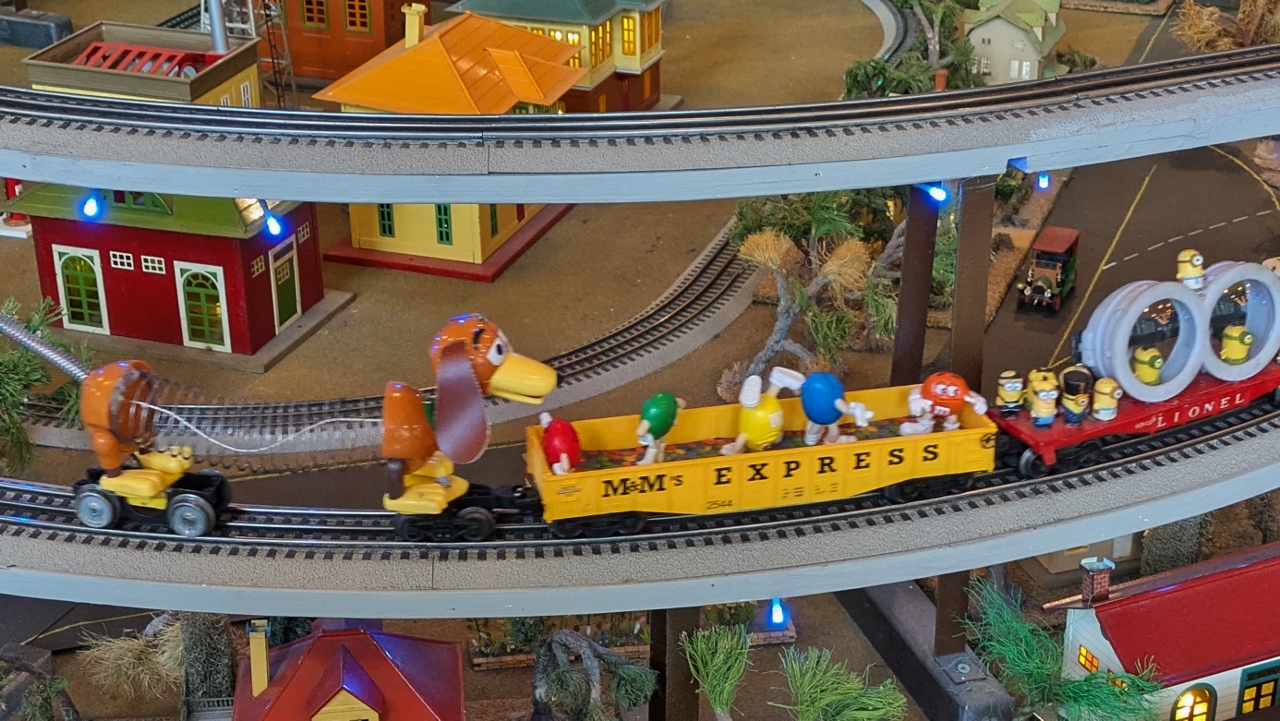
Want to go fast quickly. Dragsters seem to be the answer.
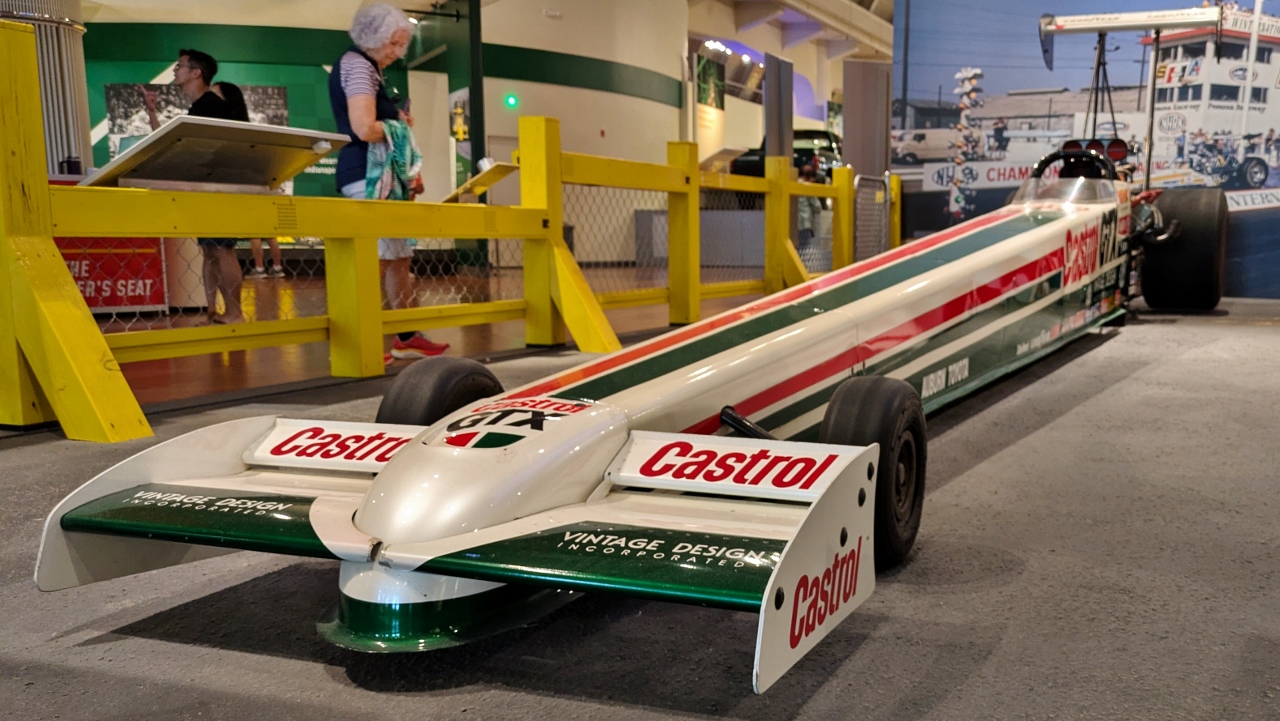


Then there are those for whom the ultimate speed is the goal.

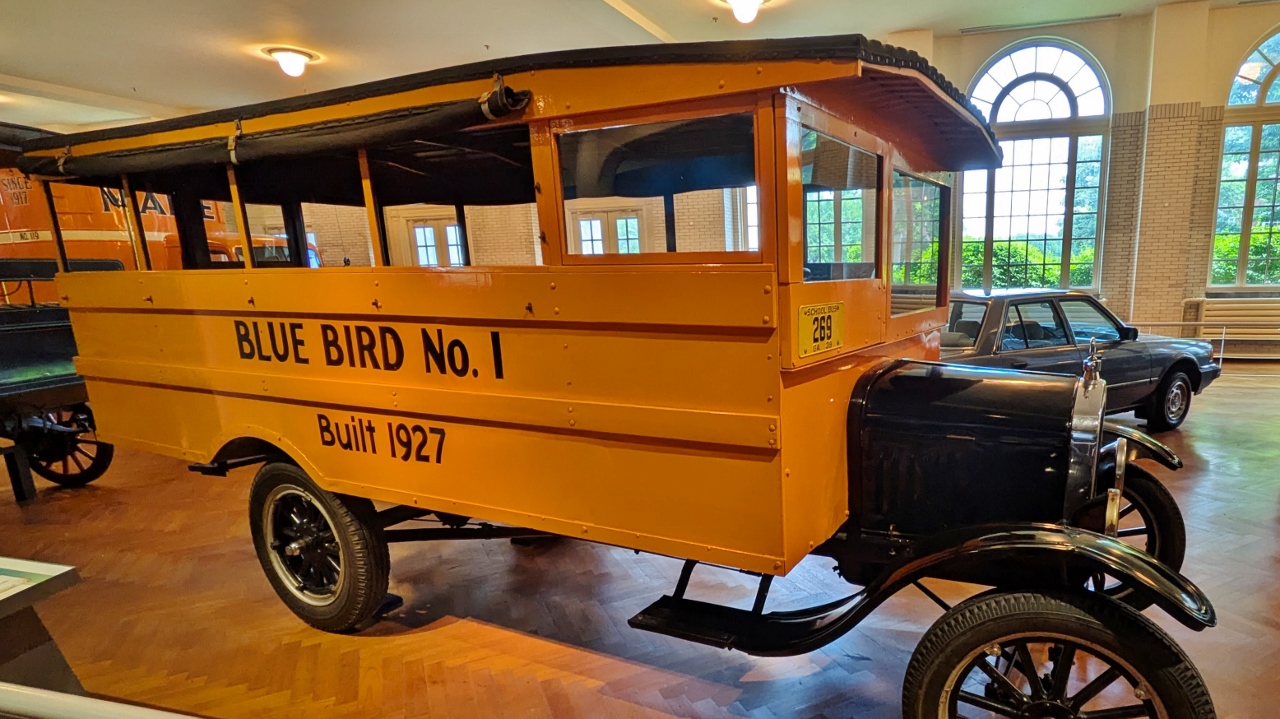
Of course some vehicles don’t need to go fast. They just need to serve a particular service.
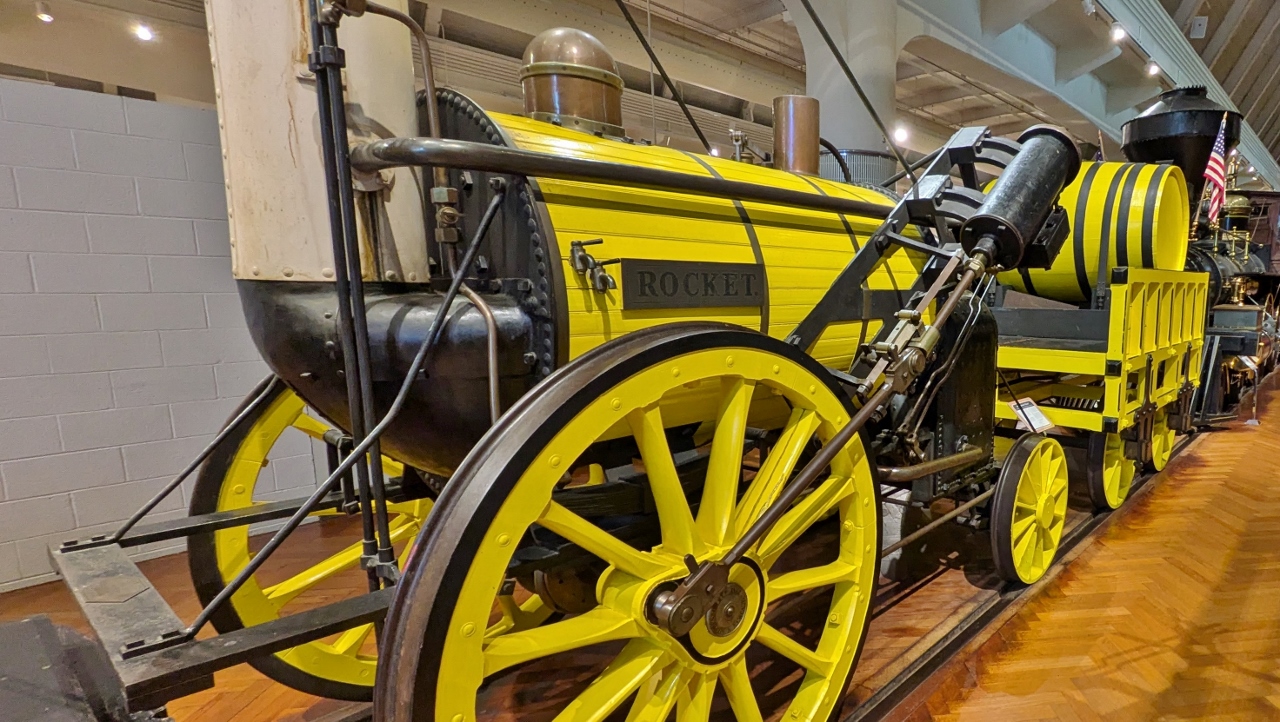
The notion of moving things along a track has ancient roots. Our modern notion of railroads using flanged wheels on metal track began to take form in the late 1700s. Today railroads remain the most cost effective freight over land.


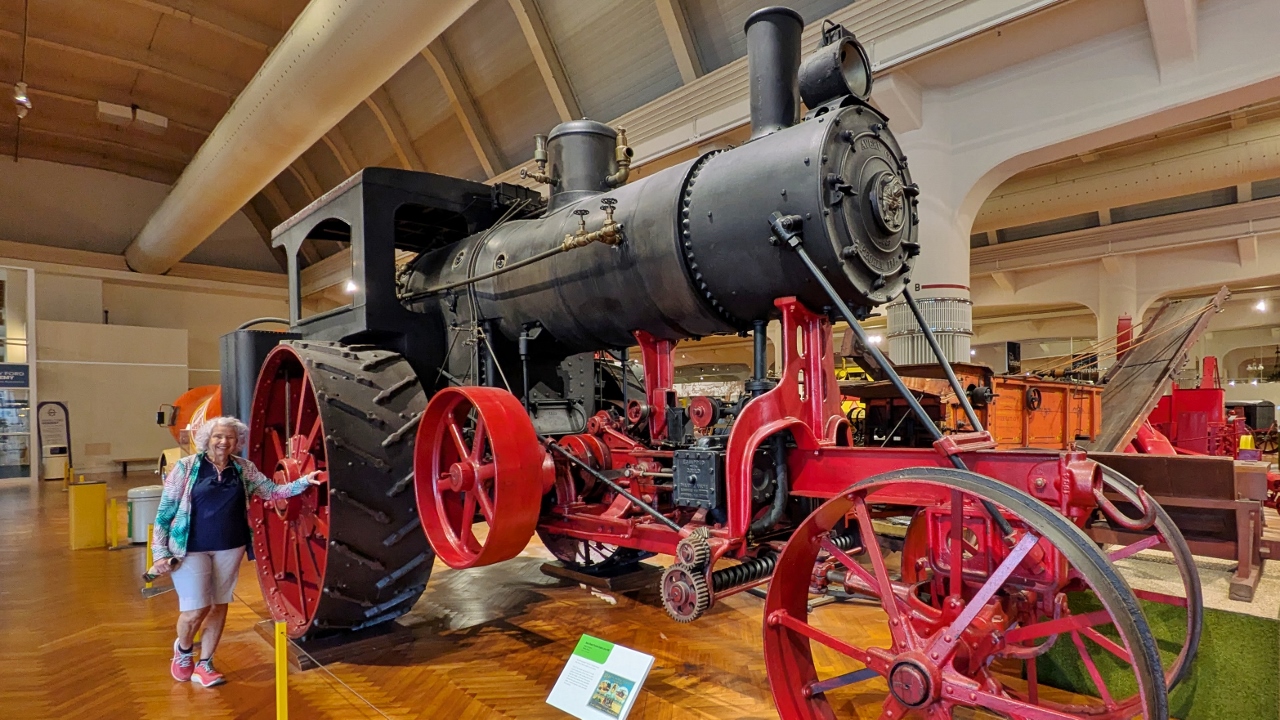
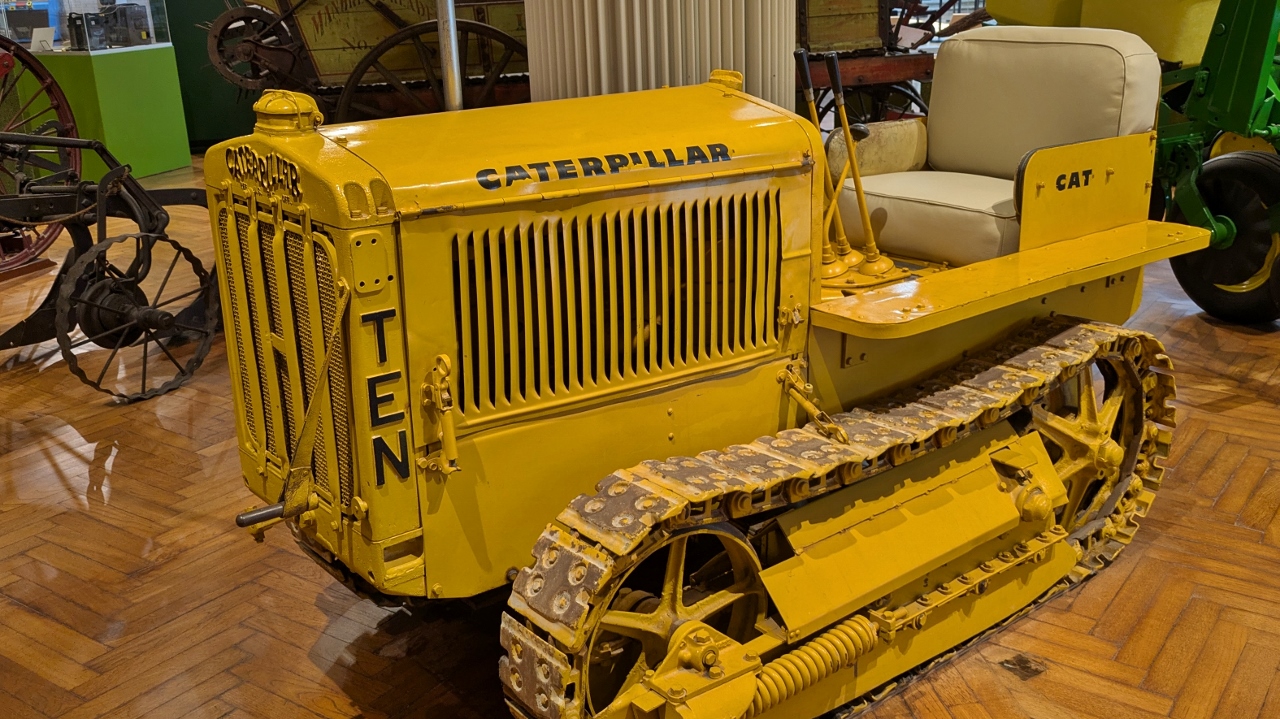
The use of machines to replace horses and oxen to cultivate crops revolutionized our ability to produce food economically.



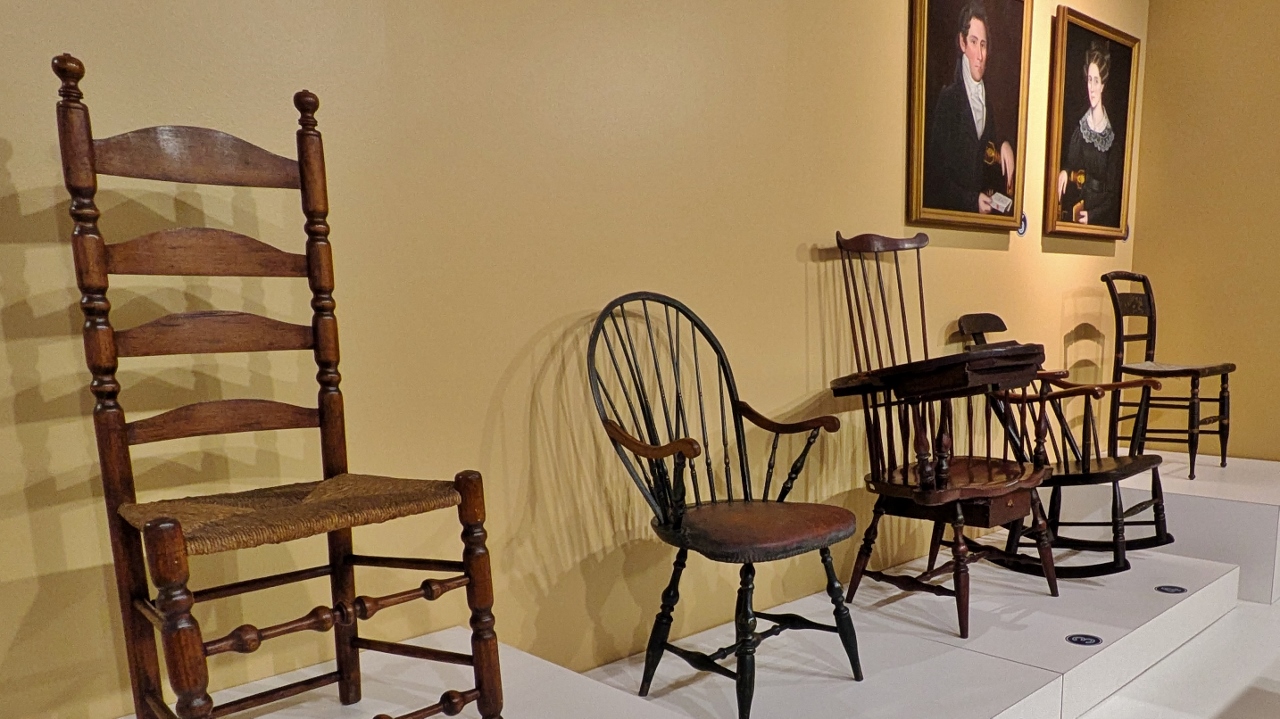
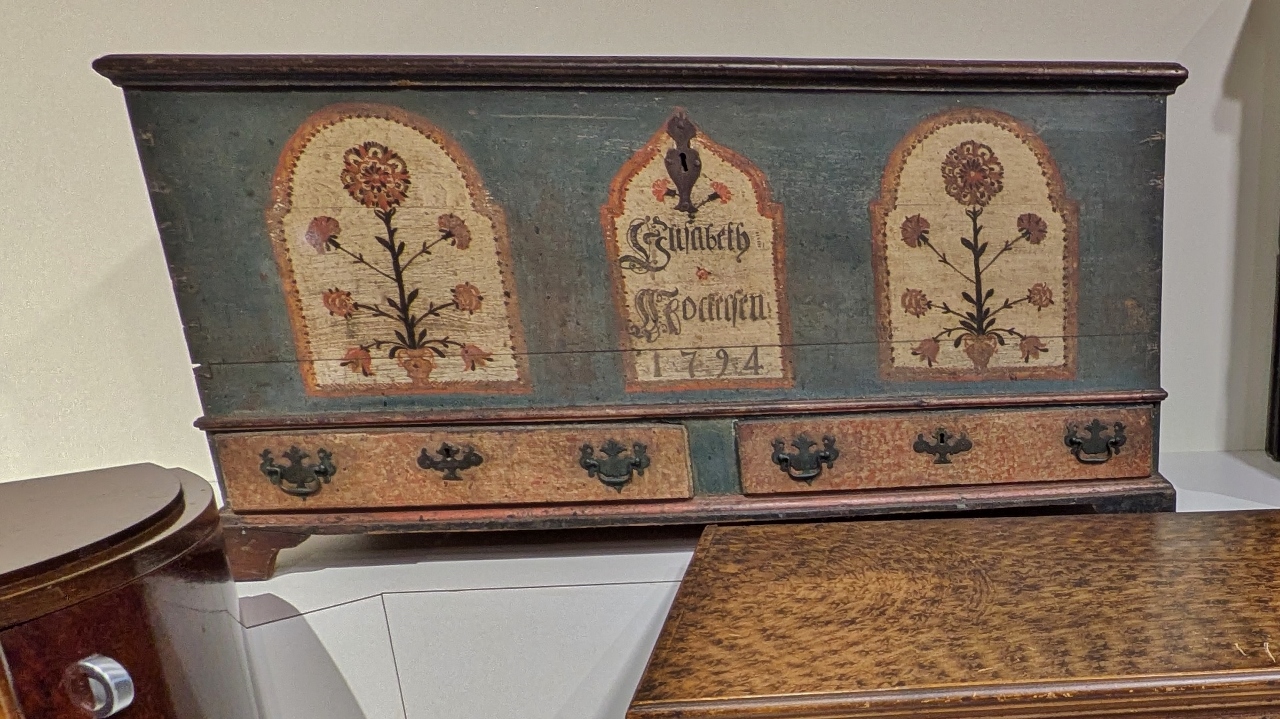
We all use furniture. While technology makes its production less expensive, it’s the form and utility that we most care about.

Technology does play a part in design possibilities, though. A little genius and the creative use of plywood technology, for instance, led to the iconic “Eames” chair.

We need machines to manufacture other machines.


Man has dreamed of flying since the beginning of time. There were many attempts but it wasn’t until 1903 that the Wright brothers actually made it happen.


And, of course, people use planes as a means to entertain other people.
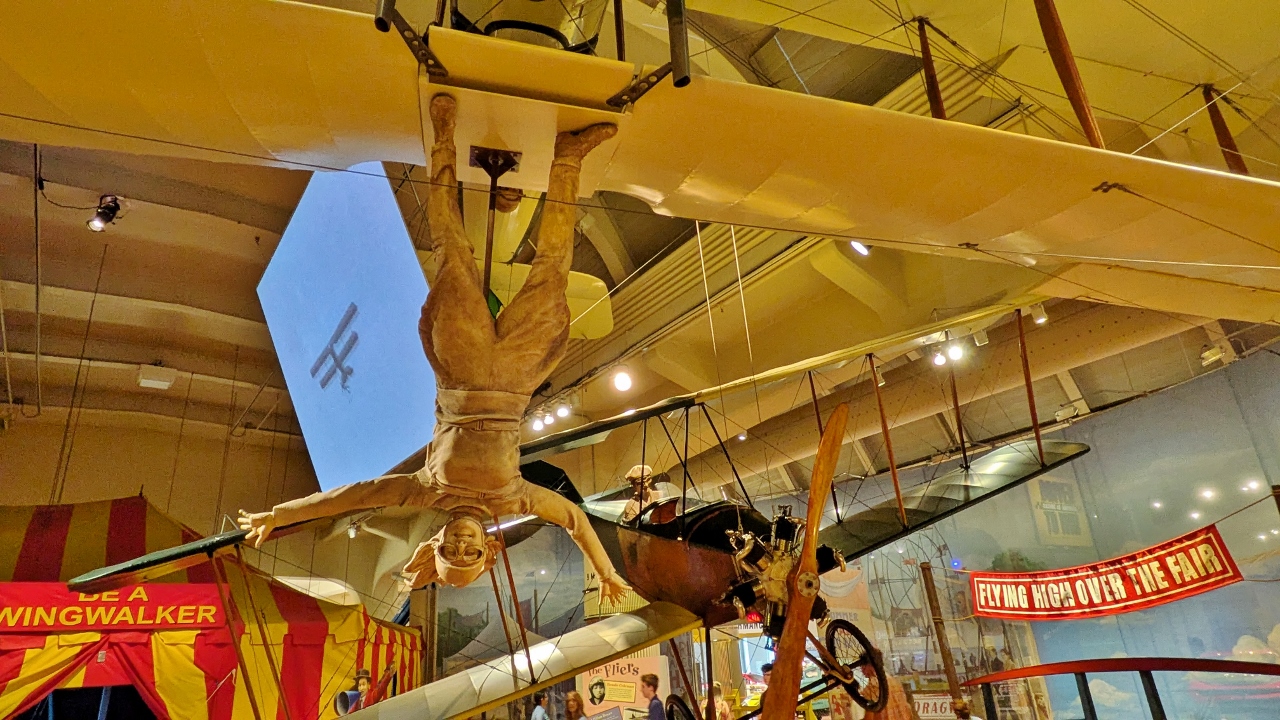

But airplanes require special runways to take off and land. What if someone could make runways unnecessary?
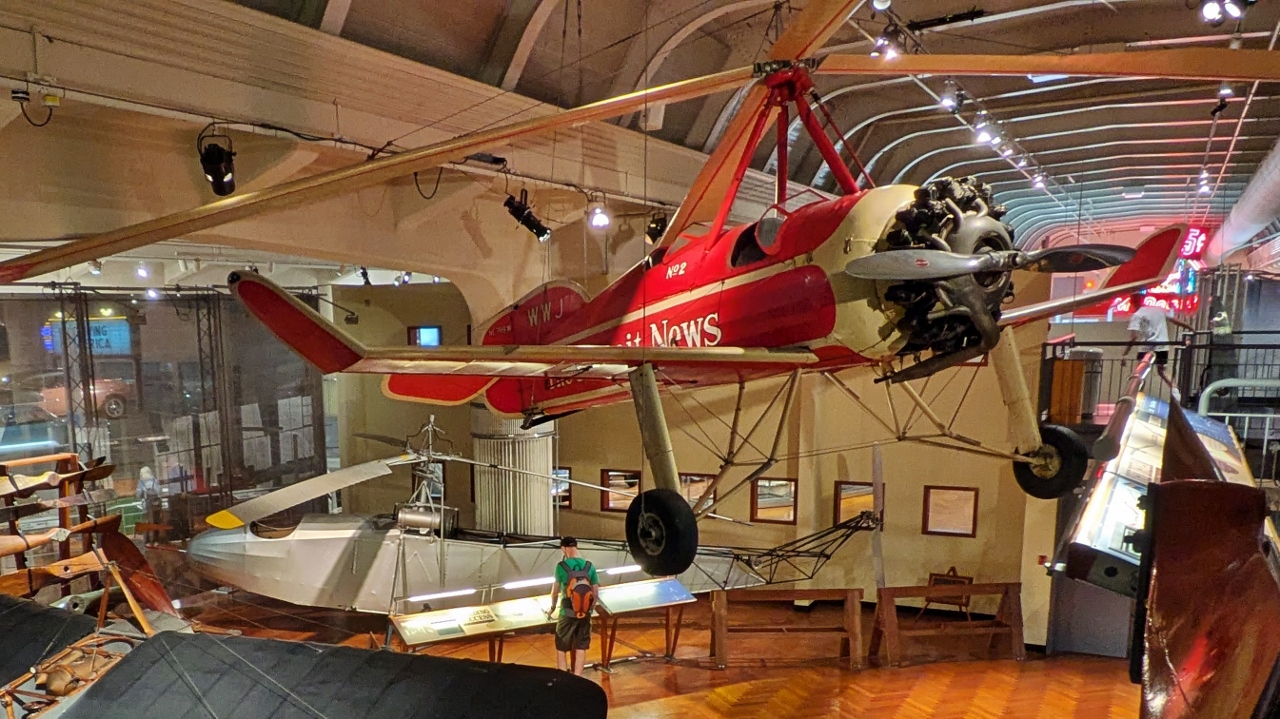

For most of history products were made by hand in the workers home or shop. Eventually, as products became more complex and the scale of manufacturing operations increased, some manufacturers became specialized.

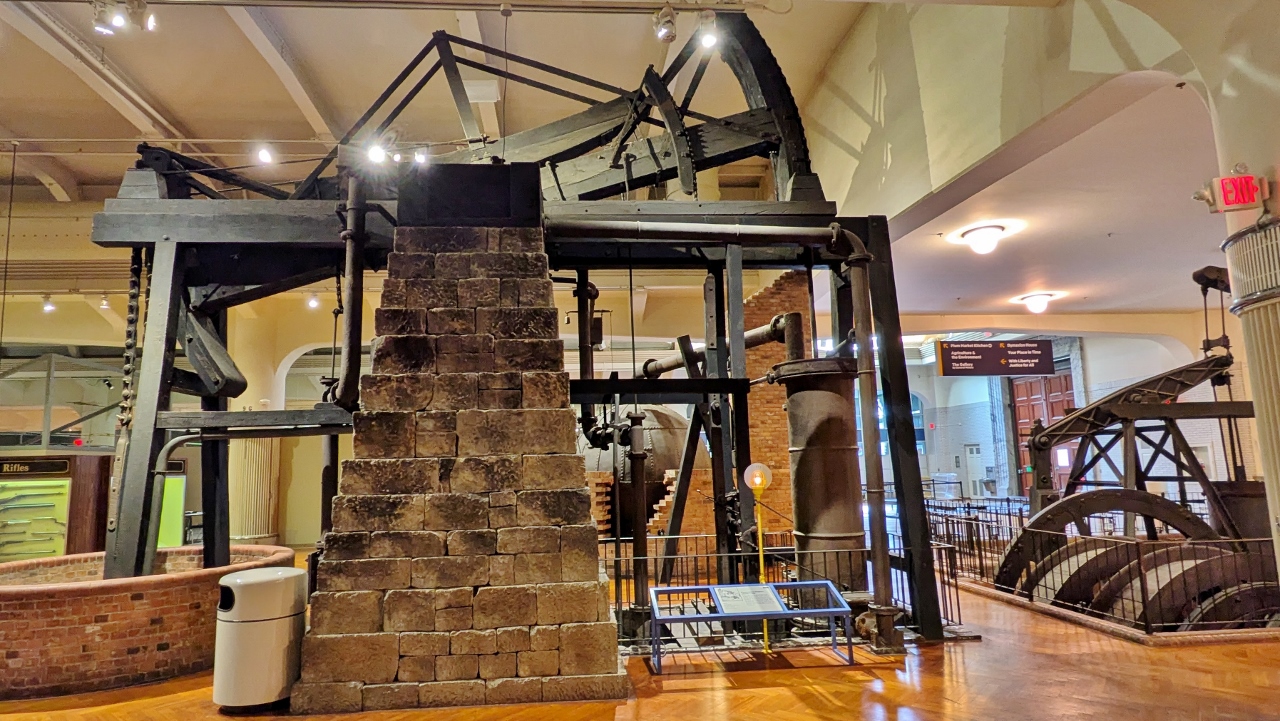
Manufacturers needed power to drive their facilities. Water wheels driving belts that, in turn, drove machines worked for a while. But the creation of the power depended on the availability of water power. The development of steam and internal combustion engines allowed the power to be generated anywhere.


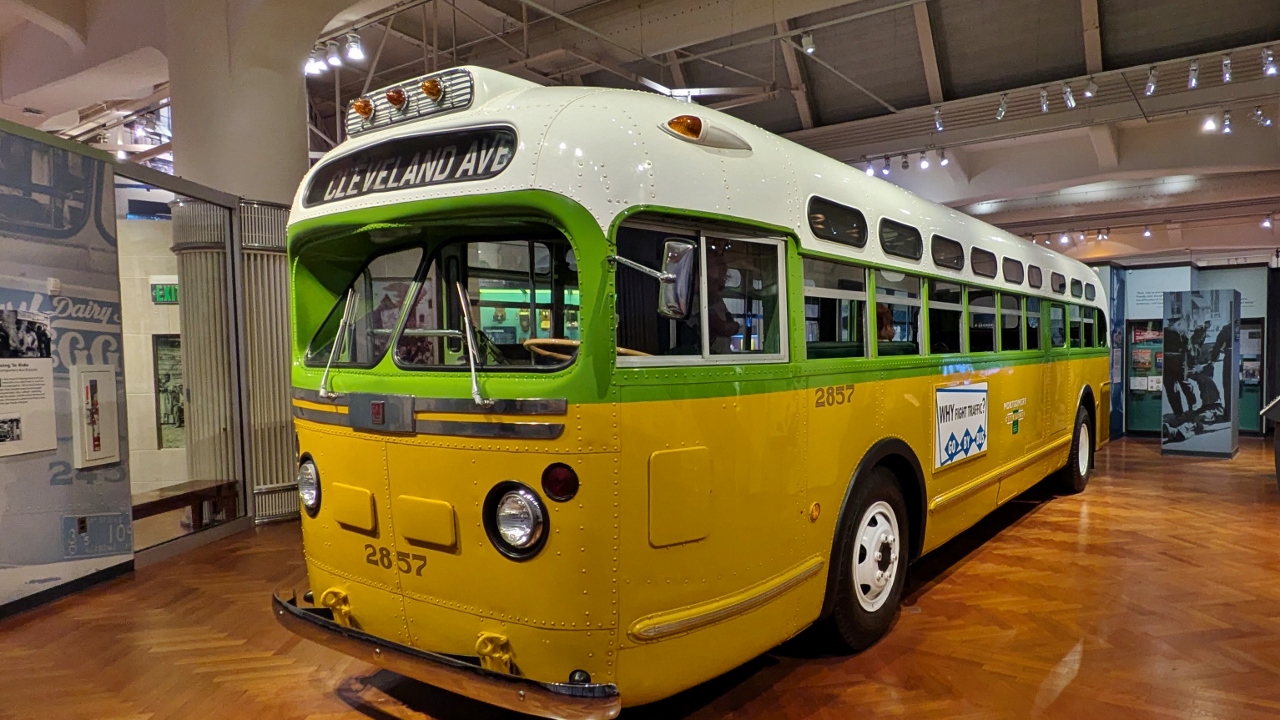
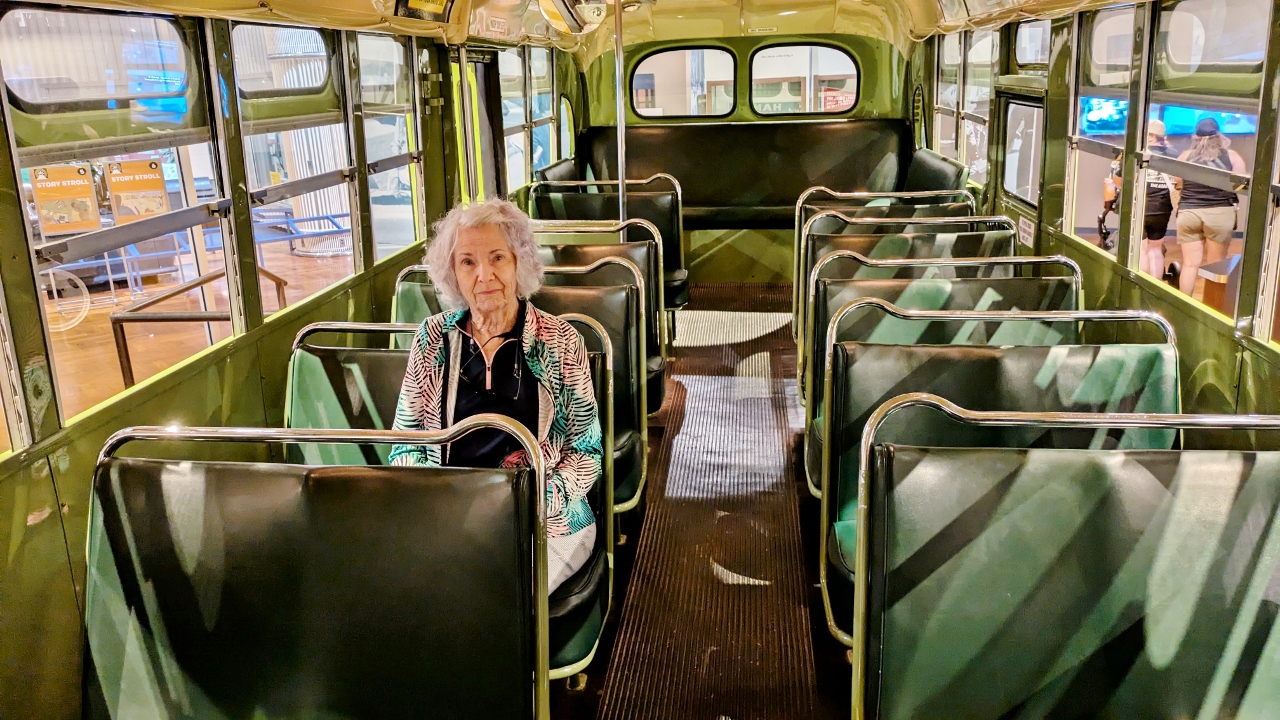
There was a good display about the issue of human rights. It didn’t lend itself to much photography except for a single, poignant item on display. The bus on which, in 1955, Rosa Parks refused to give up her seat. The bus was found abandoned in an Alabama field. After being authenticated it was acquired by the Henry Ford Museum on October 25, 2001 for $492,000. After spending an additional $300,000 on restoration it was placed on display February 1, 2003. The bus was a focal point of celebrations of Rosa Parks’ life and legacy when she passed away in 2005, as well as on her 100th birthday in 2013.
We were both exhausted and sated by the end of the day. Worth it? You bet!
Oh, yeah, dinner … we stopped and picked up a couple of pizzas, GF for Sandy, deep dish for Bill.